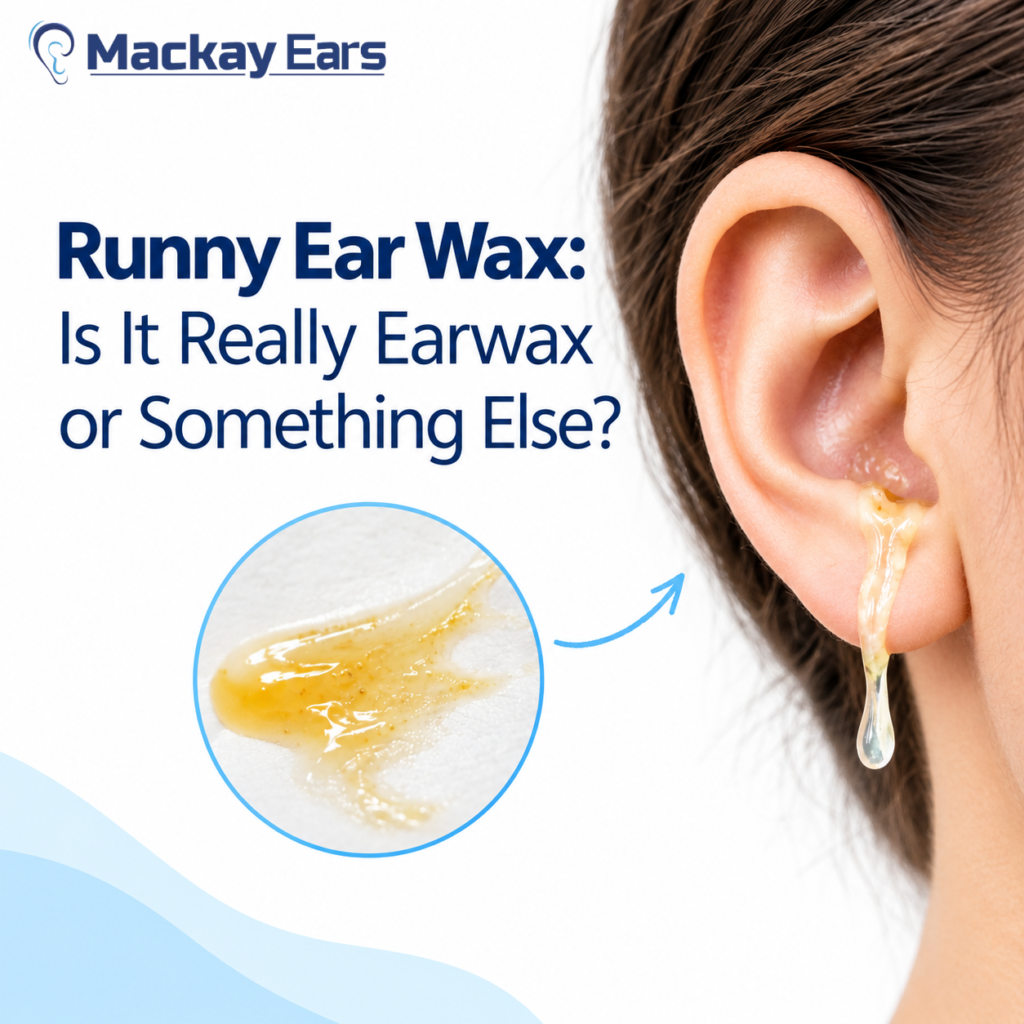
Have you noticed runny, watery or liquid coming from your ear and wondered whether it is simply earwax?
Earwax can naturally be soft, sticky or moist. However, watery or runny fluid coming from the ear is not always earwax. It can sometimes be caused by irritation, an ear infection, inflammation or another condition affecting the ear canal or eardrum.
Knowing the difference between normal wet earwax and unusual ear discharge is important.
In this guide, Mackay Ears explains what runny earwax may look like, what different types of ear fluid can mean, when it may be related to earwax, and when you should have your ear professionally assessed.
Quick answer: Wet or sticky earwax can be normal, but persistent watery, yellow, green, bloody or foul-smelling fluid coming from the ear should not automatically be assumed to be earwax. If discharge occurs with pain, hearing loss, fever, dizziness or other symptoms, appropriate medical assessment is recommended.
What Does Normal Earwax Look Like?
Earwax, also called cerumen, is naturally produced inside the ear canal.
It can vary significantly from person to person.
Normal earwax may be:
- Soft and sticky
- Moist or wet
- Yellow or honey-coloured
- Orange
- Light brown
- Dark brown
- Dry and flaky
- Firm or crumbly
The type of earwax you naturally produce is influenced partly by genetics. Some people naturally have wetter, stickier earwax, while others have drier, more flaky wax.
Therefore, wet earwax does not automatically mean there is a problem.
The important question is whether what you are seeing is actually earwax or another type of fluid.
Sometimes.
If the material is yellowish, sticky, wax-like and resembles the earwax you normally produce, it may simply be soft or wet earwax.
However, genuinely watery fluid that repeatedly leaks from the ear is different.
It is particularly important to pay attention if the fluid:
- Looks like water
- Keeps leaking
- Has an unpleasant smell
- Is green or yellow and unusually thin
- Contains blood
- Is accompanied by pain
- Is associated with hearing changes
- Occurs with dizziness or fever
In these situations, it is better not to assume that the fluid is simply earwax.
How Can You Tell Earwax From Ear Discharge?
There is no reliable way to diagnose the cause based on appearance alone, but some general differences can be useful.
| Feature | Earwax | Possible ear discharge |
| Texture | Sticky, soft, flaky or firm | Often watery or unusually thin |
| Colour | Yellow, orange or brown | May be clear, yellow, green or blood-stained |
| Smell | Usually mild | May have a strong or unpleasant odour |
| Amount | Usually small | May repeatedly leak or drain |
| Symptoms | Often none | May occur with pain, hearing loss, fever or dizziness |
| What to do | Usually leave it alone unless causing problems | Consider appropriate professional assessment |
Important: Appearance alone cannot reliably identify the cause. An ear examination may be needed.
What Can Cause Fluid to Come From the Ear?
Several different conditions can cause fluid or discharge from the ear.
1. Wet or Soft Earwax
Some people naturally produce wet earwax.
If the material is sticky, wax-like and there are no other symptoms, it may simply be normal cerumen.
The colour may range from pale yellow to orange or brown.
There is generally no reason to remove healthy earwax simply because it is moist.
2. Ear Infection
An ear infection can cause fluid or discharge from the ear.
Depending on the type and location of the infection, discharge may be:
- Yellow
- Greenish
- Cloudy
- Thick
- Foul-smelling
- Occasionally blood-stained
An infection may also cause:
- Ear pain
- Tenderness
- Reduced hearing
- Fever
- A blocked sensation
- Dizziness in some cases
Green or foul-smelling discharge should not simply be treated as ordinary earwax.
If you have suspected infection, an appropriate healthcare professional should assess the ear.
3. Irritation or Injury to the Ear Canal
The skin inside the ear canal is delicate.
Inserting objects into the ear can cause irritation or small injuries.
Common examples include:
- Cotton buds
- Fingers
- Hairpins
- Ear-cleaning tools
- Other objects
Injury can result in irritation, discomfort or blood-stained material.
This is one reason why repeatedly trying to clean a runny ear can make the situation worse.
4. Swimmer’s Ear
Frequent exposure to water can contribute to inflammation or infection of the outer ear canal, commonly known as swimmer’s ear.
People may experience:
- Ear pain
- Itching
- Redness
- Tenderness
- Fluid or discharge
- Reduced hearing
The ear may feel blocked or uncomfortable, particularly after swimming.
If you regularly swim and notice persistent discharge from your ear, it is worth having the ear appropriately assessed.
5. A Problem With the Eardrum
Fluid coming from the ear can sometimes be associated with a problem involving the eardrum.
For example, an infection or injury may cause the eardrum to perforate.
Possible symptoms can include:
- Ear pain
- Sudden change in hearing
- Fluid or discharge
- Blood-stained discharge
- Ringing in the ear
- Dizziness
A perforated eardrum requires appropriate medical assessment.
Do not put ear drops, cotton buds or other objects into the ear unless a healthcare professional has advised you to do so.
6. Water Trapped in the Ear
Sometimes the sensation of a wet ear is simply caused by water remaining in the ear after:
- Swimming
- Showering
- Bathing
You may feel as though something is moving inside your ear.
However, if fluid continues to come from the ear after the water should have drained, or if pain, discharge or hearing changes develop, it should not automatically be assumed to be trapped water.
Is Clear Fluid From the Ear Always Normal?
No.
Clear fluid can sometimes occur for relatively simple reasons, such as water remaining after swimming.
However, persistent clear drainage can have other causes.
If clear fluid is repeatedly leaking from the ear, particularly following a head injury, surgery or significant trauma, seek prompt medical assessment.
Do not attempt to diagnose the source of clear ear fluid yourself.
What Does Yellow Fluid From the Ear Mean?
Yellow material can sometimes look similar to wet earwax.
But thin yellow fluid or pus-like discharge may also be associated with an ear infection.
Consider the other symptoms.
Yellow material that is:
- Thick and wax-like
- Sticky
- Similar to your usual earwax
- Not associated with pain or other symptoms
may simply be earwax.
Yellow fluid that is:
- Watery
- Persistent
- Foul-smelling
- Accompanied by pain
- Associated with hearing loss or fever
should be professionally assessed.
What Does Green Fluid From the Ear Mean?
Green discharge is not something you should automatically assume is earwax.
Green ear discharge can occur with infection and warrants appropriate assessment, particularly when combined with:
- Ear pain
- Fever
- Hearing loss
- Swelling
- Dizziness
- Unpleasant smell
If you notice persistent green fluid, avoid putting objects into the ear and arrange an appropriate medical assessment.
What If There Is Blood in the Earwax?
A small amount of blood may occur if the skin of the ear canal has been scratched or irritated.
This can happen after using cotton buds or other objects inside the ear.
However, unexplained bleeding from the ear should not be ignored.
Seek appropriate medical assessment if:
- Bleeding continues
- There is significant pain
- You have reduced hearing
- The bleeding followed an injury
- There is persistent discharge
- You experience dizziness
Can Impacted Earwax Cause Fluid to Leak?
Impacted earwax itself is generally more associated with blocked or reduced hearing, fullness, discomfort and tinnitus than with persistent watery discharge.
If you think you have impacted wax and are also experiencing fluid from the ear, it is important not to assume that wax is responsible.
There may be another condition affecting the ear that needs to be identified first.
This is particularly important if you have pain, infection symptoms, bleeding or a suspected eardrum problem.
Should You Clean Runny Earwax With a Cotton Bud?
No.
A cotton bud may appear to absorb the fluid, but putting it into the ear canal can:
- Push wax deeper
- Irritate the skin
- Cause small injuries
- Increase the risk of infection
- Potentially damage the eardrum
If your ear is producing unusual fluid, repeatedly cleaning it may make the underlying problem harder to resolve.
Instead, gently wipe the outside of the ear and seek appropriate assessment if the drainage persists.
Should You Use Ear Drops for Runny Ear Fluid?
Not without knowing what is causing the fluid.
Some ear drops are appropriate for particular conditions, but not every ear is suitable for drops.
For example, if there is a perforated eardrum or another ear problem, certain products may not be appropriate.
If your ear is leaking fluid, it is safer to identify the cause before treating it yourself.
When Should You See a Doctor or Ear Care Professional?
You should consider professional assessment if you have:
- Persistent ear discharge
- Repeated watery fluid
- Yellow or green discharge
- Foul-smelling fluid
- Blood from the ear
- Ear pain
- Hearing loss
- Persistent blocked-ear sensation
- Significant itching
- Dizziness or vertigo
- Fever
- Symptoms after an ear injury
You should seek prompt medical assessment for sudden hearing loss, significant dizziness, severe pain, substantial bleeding or ear discharge following significant trauma.
What About Runny Earwax and Hearing Loss?
If your ear feels wet and blocked at the same time, earwax could be contributing to the sensation.
An accumulation of earwax can interfere with sound reaching the eardrum and may cause:
- Muffled hearing
- Reduced hearing
- A blocked feeling
- Ear fullness
- Tinnitus
However, hearing loss should not automatically be attributed to earwax.
If hearing changes are sudden or significant, appropriate medical assessment is important.
Professional Earwax Removal in Mackay
If your symptoms are caused by earwax build-up, professional earwax removal may be appropriate.
Mackay Ears provides professional earwax assessment and microsuction earwax removal in Mackay.
For more information about ear care and professional earwax removal, visit:
If you are unsure whether what you are seeing is earwax or ear discharge, an appropriate examination can help determine the cause before removal is attempted.
Why Professional Assessment Matters
It can be tempting to look at fluid coming from your ear and assume it is simply wax.
But ear symptoms can have several different causes.
A professional assessment can help determine whether the problem is related to:
- Earwax build-up
- Ear canal irritation
- Infection
- Water exposure
- Eardrum problems
- Another ear condition
This is particularly important when symptoms include pain, hearing loss, bleeding, dizziness or persistent discharge.
Frequently Asked Questions About Runny Ear Wax
Is runny earwax normal?
It can be. Some people naturally have softer or wetter earwax. However, persistent watery or unusual fluid coming from the ear may be discharge rather than normal earwax.
Why is my earwax watery?
Earwax can naturally be soft or moist. Water exposure can also make material in the ear appear more liquid. If the fluid continues to drain or is associated with pain, smell, hearing changes or other symptoms, have the ear assessed.
Is yellow liquid from the ear earwax?
It can be, but not always. Thick, sticky yellow material may be earwax, while thin or persistent yellow discharge can have other causes, including infection.
Is green earwax normal?
Green discharge should not automatically be considered normal earwax. It can be associated with infection and should be appropriately assessed, particularly if other symptoms are present.
Why is clear fluid coming from my ear?
Clear fluid may sometimes be water after swimming or bathing, but persistent clear drainage can have other causes. Ongoing drainage should be professionally assessed.
Can an ear infection cause runny ears?
Yes. Ear infections can cause fluid or discharge from the ear. Pain, fever, hearing changes, swelling or an unpleasant smell can provide additional clues.
Can cotton buds cause ear discharge?
They can irritate or injure the delicate skin of the ear canal. This may cause pain or blood-stained material and can also push wax deeper into the ear.
Can earwax cause a blocked ear?
Yes. Impacted earwax can cause muffled hearing, reduced hearing, fullness and a blocked sensation.
Should I remove the runny earwax myself?
It is better not to put cotton buds, fingers or other objects into the ear canal. If you are unsure whether the material is wax or discharge, have the ear appropriately assessed.
Where can I get earwax removal in Mackay?
Mackay Ears provides professional earwax assessment and microsuction earwax removal at Suite 4, 87 Willetts Road, Mount Pleasant, Mackay, Queensland 4740. For enquiries, call 0405 675 607.
Key Takeaway
Runny earwax is not always a problem — but runny fluid from the ear is not always earwax.
Wet, sticky yellow or brown material may simply be your normal earwax. But persistent watery fluid, green or yellow discharge, blood, foul-smelling drainage or fluid accompanied by pain or hearing changes may indicate another ear problem.
The safest approach is to avoid putting objects into the ear canal and have persistent or unusual ear drainage appropriately assessed.
If the cause is earwax build-up, professional earwax removal may help.
Mackay Ears
Professional Earwax Removal & Microsuction in Mackay
Suite 4, 87 Willetts Road, Mount Pleasant, Mackay, Queensland 4740, Australia
0405 675 607
Medical Disclaimer
This article is for general educational purposes and does not replace individual medical advice, diagnosis or treatment. Fluid or discharge from the ear can have different causes. If you experience sudden hearing loss, severe ear pain, significant bleeding, persistent discharge, severe dizziness or symptoms following significant trauma, seek appropriate medical attention promptly.