Blocked ears can affect your hearing, balance, concentration, and overall quality of life. If you’ve been searching for the best ear wax removal method, you’ve likely come across two common treatments: microsuction and ear syringing (ear irrigation).
But which one is actually safer?
In this guide, we’ll explain the differences between both procedures, their advantages and limitations, and why many modern ear care clinics now recommend professional microsuction ear wax removal for suitable patients. Clinical guidelines note that both irrigation and manual removal methods are used in practice, but the best choice depends on the patient’s ear health and clinical assessment.
What Is Ear Wax?
Ear wax (cerumen) is a natural substance produced by your ears to:
- Protect the ear canal
- Trap dust and bacteria
- Prevent infections
- Keep the ear canal moisturised
Most people never need to remove ear wax because the ear naturally cleans itself. Problems occur only when wax becomes impacted and starts causing symptoms.
Signs You May Need Ear Wax Removal
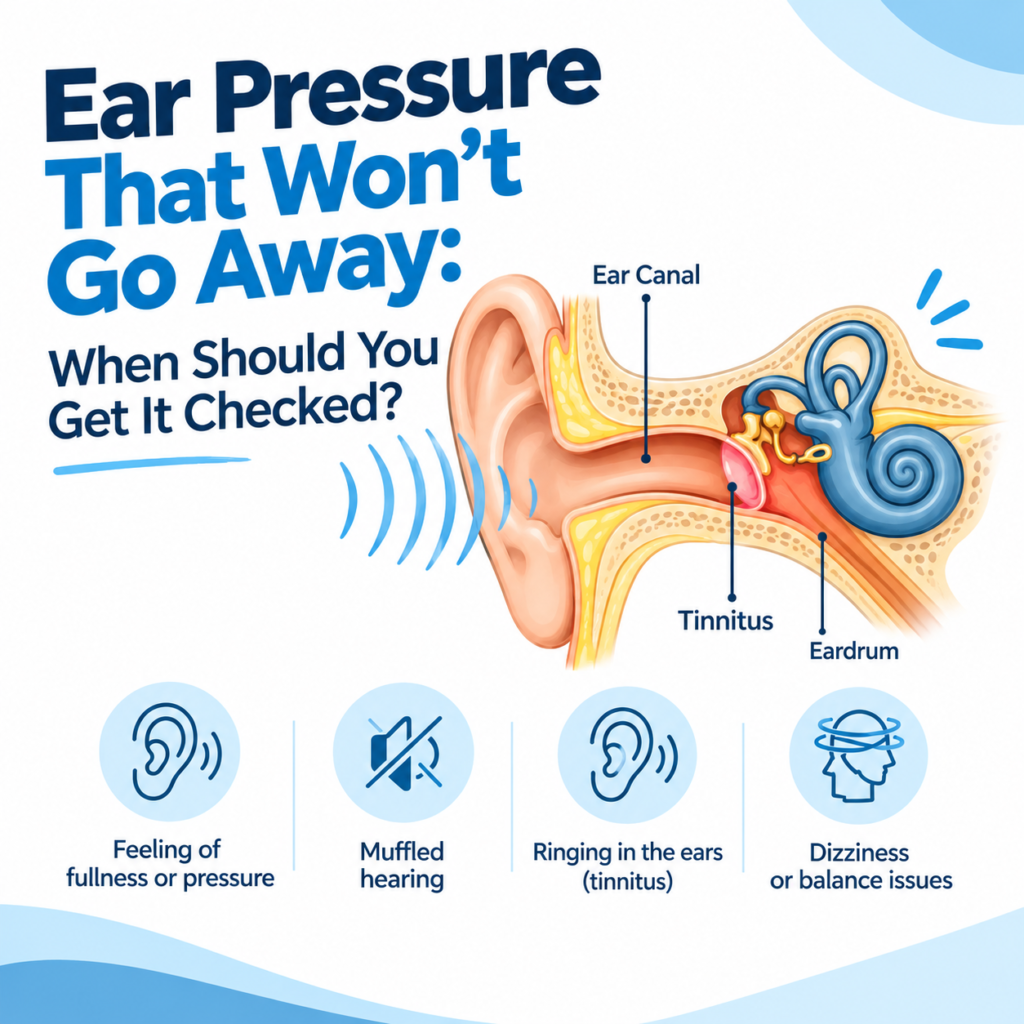
Professional ear cleaning may help if you experience:
- Blocked ears
- Reduced hearing
- Muffled sounds
- Ear fullness
- Ringing in the ears (tinnitus)
- Dizziness
- Hearing aid feedback
- Ear discomfort
If these symptoms continue, a professional ear examination is recommended before treatment.
What Is Ear Syringing?
Ear syringing (also called ear irrigation) removes wax by flushing warm water into the ear canal.
The water helps loosen and wash out impacted ear wax.
This method has been used for many years and may still be appropriate for selected patients after clinical assessment.
However, because water is introduced into the ear canal, it isn’t suitable for everyone. Clinical guidance also notes that irrigation can be associated with adverse effects in some patients.
What Is Microsuction Ear Wax Removal?
Microsuction is a modern ear wax removal technique performed by trained clinicians.
Using:
- Magnification
- Medical lighting
- A fine sterile suction device
the clinician can see the ear canal throughout the procedure while gently removing wax with precision.
Unlike syringing, microsuction does not rely on flushing water into the ear.
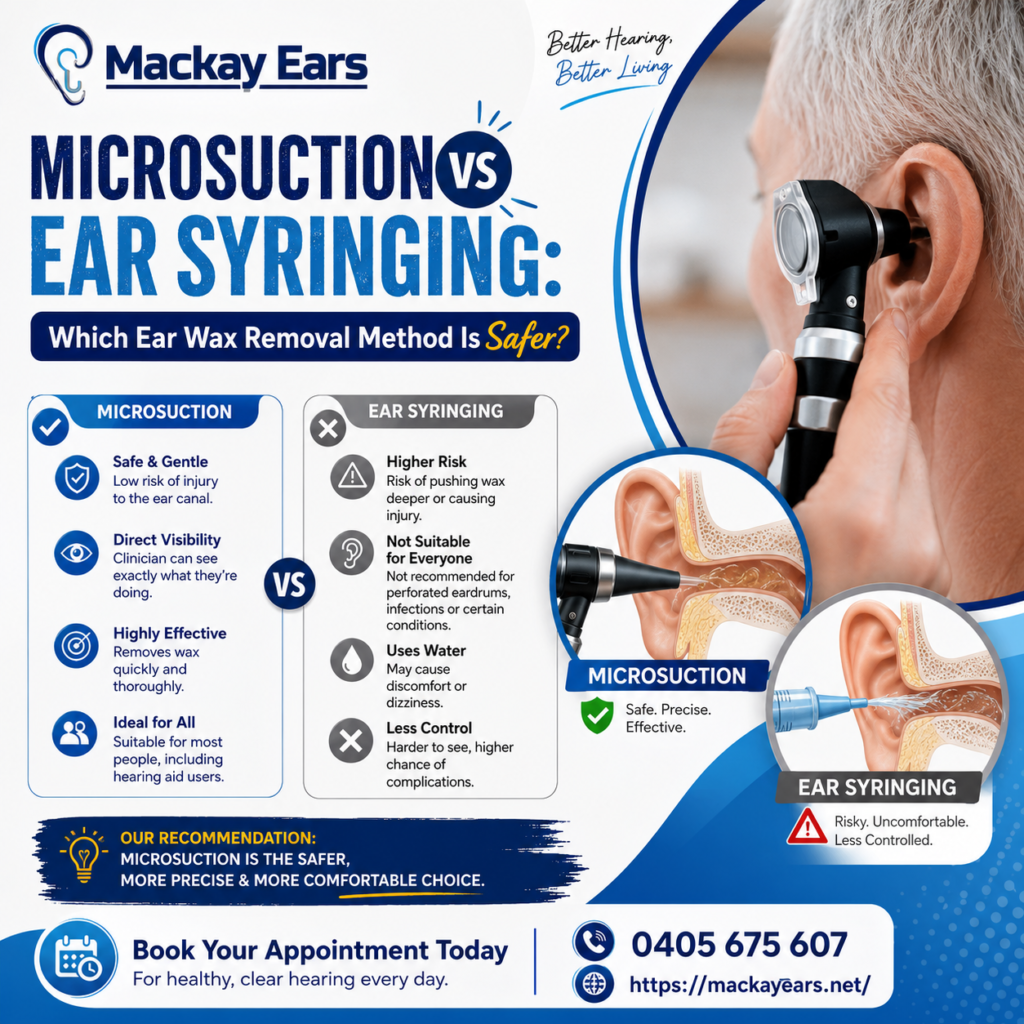
Microsuction vs Ear Syringing: Side-by-Side Comparison
| Feature | Microsuction | Ear Syringing |
| Uses Water | No | Yes |
| Direct Visual Guidance | Yes | Limited |
| Precision | High | Moderate |
| Suitable for Many Hearing Aid Users | Often Yes | May not always be suitable |
| Suitable After Certain Ear Conditions | Often preferred after assessment | May not be appropriate |
| Procedure Time | Usually 20–30 minutes | Varies |
| Recovery | Immediate | Immediate in many cases |
The most suitable option always depends on your ear health, medical history, and clinician’s assessment.
Why Many Clinics Prefer Microsuction
Many modern ear clinics now use microsuction because it offers several practical advantages.
1. Better Visibility
The clinician can see inside the ear throughout treatment.
This allows more controlled wax removal.
2. No Water Inside the Ear
Because no irrigation is used, microsuction avoids introducing water into the ear canal.
This can be beneficial for people with certain ear conditions.
3. Precise Treatment
Instead of relying on water pressure, microsuction removes wax exactly where it’s located.
4. Quick Procedure
Most appointments take approximately 20–30 minutes.
Many patients notice clearer hearing immediately after treatment.
5. Comfortable Experience
Most patients describe microsuction as:
- Gentle
- Fast
- Comfortable
Although you may hear the suction device during treatment.
When Ear Syringing May Not Be Recommended
Ear irrigation may not be appropriate if you have:
- A perforated eardrum
- Certain ear infections
- Previous ear surgery
- Grommets (or a history of them in some cases)
- Some chronic ear conditions
Your clinician will determine the safest option after examining your ears.
Is Microsuction Safer?
Current clinical guidance does not conclude that microsuction is universally superior for every patient because high-quality head-to-head evidence remains limited. However, microsuction is widely used because it allows treatment under direct visual guidance and avoids introducing water into the ear canal, making it a preferred option in many clinical situations after assessment.
Safety depends on:
- Professional assessment
- Proper equipment
- Clinician experience
- Your individual ear condition
This is why professional examination should always come before treatment.
Who Benefits Most from Microsuction?
Microsuction is commonly considered for:
- Hearing aid users
- Older adults
- People with recurrent wax build-up
- Patients with narrow ear canals
- Earbud users
- Individuals needing regular ear cleaning
A clinician will confirm whether it is appropriate for your situation.
Why You Should Avoid DIY Ear Cleaning
Many people try:
- Cotton buds
- Ear picks
- Hairpins
- Ear candles
- Home irrigation kits
These methods may:
- Push wax deeper
- Irritate the ear canal
- Increase blockage
- Cause injury
Professional assessment is the safest way to determine whether wax removal is actually needed.
Frequently Asked Questions
Which ear wax removal method is best?
The best method depends on your symptoms, ear health, and medical history. After examining your ears, a clinician can recommend the most suitable option.
Is microsuction painful?
Most patients experience little or no pain.
Some people with very hard wax may notice temporary sensitivity.
Is ear syringing still used?
Yes.
Some healthcare providers continue to use ear irrigation for suitable patients, although many clinics also offer microsuction.
Does microsuction improve hearing immediately?
If ear wax is causing hearing loss, many patients notice improvement immediately after successful removal.
How often should ears be professionally cleaned?
There is no fixed schedule.
Some people never require treatment, while hearing aid users or people with recurrent wax build-up may benefit from regular check-ups.
Why Choose Mackay Ears?
At Mackay Ears, patient safety comes first.
Every appointment includes:
- Comprehensive ear examination
- Professional assessment
- Microsuction ear wax removal where clinically appropriate
- Modern equipment
- Experienced clinicians
- Personalised aftercare advice
Our goal is to help you hear clearly while providing comfortable, evidence-based ear care.
Final Thoughts
Both ear syringing and microsuction can be appropriate methods for removing impacted ear wax, but the right choice depends on your individual circumstances. Microsuction has become increasingly popular because it provides direct visual guidance and avoids introducing water into the ear canal, while irrigation may still be suitable for selected patients.
If you’re experiencing blocked ears, reduced hearing, or recurring wax build-up, booking a professional assessment is the best first step.
At Mackay Ears, we’re committed to providing safe, patient-focused ear care using modern microsuction techniques when clinically appropriate.
Book your appointment today and experience professional ear care you can trust.