Hearing aids can significantly improve your quality of life by helping you hear conversations, enjoy music, and stay connected with the world around you. However, many hearing aid users experience a common issue that often goes unnoticed—ear wax build-up.
Excessive ear wax can reduce the effectiveness of your hearing aids, cause blocked ears, create feedback (whistling sounds), and even affect your hearing.
If you wear hearing aids, understanding how ear wax affects your ears and your devices is essential for maintaining healthy hearing.
In this guide, we’ll explain why hearing aid users are more likely to experience ear wax problems, how to prevent excessive build-up, and when professional ear wax removal is recommended.
What Is Ear Wax?
Ear wax, also known as cerumen, is a natural substance produced by glands inside the ear canal.
Although many people think ear wax is dirty, it actually plays an important role in protecting your ears.
Ear wax helps to:
- Trap dust, dirt, and bacteria
- Prevent infections
- Keep the ear canal moisturised
- Protect the delicate skin inside the ear
- Naturally clean the ear canal
In most people, ear wax slowly moves out of the ear by itself.
Problems only occur when too much wax builds up.
Why Do Hearing Aid Users Experience More Ear Wax Build-Up?
Hearing aids sit inside or partially inside the ear canal.
Because of this, they can interfere with the ear’s natural self-cleaning process.
Instead of moving outward naturally, ear wax may become trapped inside the ear canal.
Hearing aids can also:
- Reduce natural wax movement
- Push wax deeper into the ear canal
- Cause wax to become compacted
- Increase moisture inside the ear
- Lead to recurring wax blockages
This is why ear wax build-up is one of the most common issues among hearing aid users.
How Ear Wax Affects Hearing Aids
Even a small amount of impacted ear wax can reduce the performance of your hearing aid.
Common problems include:
1. Reduced Hearing Quality
Ear wax blocks sound from reaching your eardrum, making conversations difficult to hear.
2. Whistling or Feedback
A build-up of wax can cause your hearing aid to produce high-pitched whistling sounds.
3. Muffled Sound
Sounds may become unclear, distorted, or quieter than usual.
4. Blocked Hearing Aid Receiver
Wax can clog the hearing aid receiver or microphone, reducing sound quality and device performance.
5. Frequent Repairs
Excessive wax entering the hearing aid may increase maintenance needs and shorten the lifespan of certain components.
Signs You May Need Professional Ear Wax Removal
You should arrange an ear examination if you experience:
- Blocked ears
- Reduced hearing
- Hearing aid feedback
- Ear fullness
- Muffled sounds
- Difficulty hearing conversations
- Ringing in the ears (tinnitus)
- Ear discomfort
- Frequent ear wax build-up
- Hearing aid not working properly
Professional assessment helps determine whether ear wax is causing your symptoms.
Can Ear Wax Damage Hearing Aids?
Yes.
Although hearing aids are designed to withstand everyday use, excessive ear wax can clog microphones, receivers, wax guards, and sound outlets.
This may lead to:
- Reduced sound quality
- Device malfunction
- Increased repair costs
- More frequent maintenance
Keeping both your ears and your hearing aids clean helps extend the life of your device.
Ear Care Tips for Hearing Aid Users
Following a few simple habits can help reduce ear wax problems.
Clean Your Hearing Aids Daily
Use the cleaning tools recommended by your hearing aid manufacturer.
Remove visible wax from the hearing aid after each day of use.
Never Use Cotton Buds
Cotton buds often push wax deeper into the ear canal.
Instead of removing wax, they usually make blockages worse.
Keep Your Ears Dry
Moisture inside the ear can affect both ear health and hearing aid performance.
Dry your outer ears gently after showering or swimming.
Replace Wax Guards Regularly
Many hearing aids include wax filters or wax guards.
Replace them according to the manufacturer’s recommendations.
Schedule Regular Ear Check-Ups
If you wear hearing aids every day, regular professional ear examinations can help detect wax build-up before it causes problems.
Why Professional Ear Wax Removal Is Important
When ear wax becomes impacted, attempting to remove it yourself can increase the risk of injury.
Professional ear wax removal allows trained clinicians to safely assess your ears before treatment.
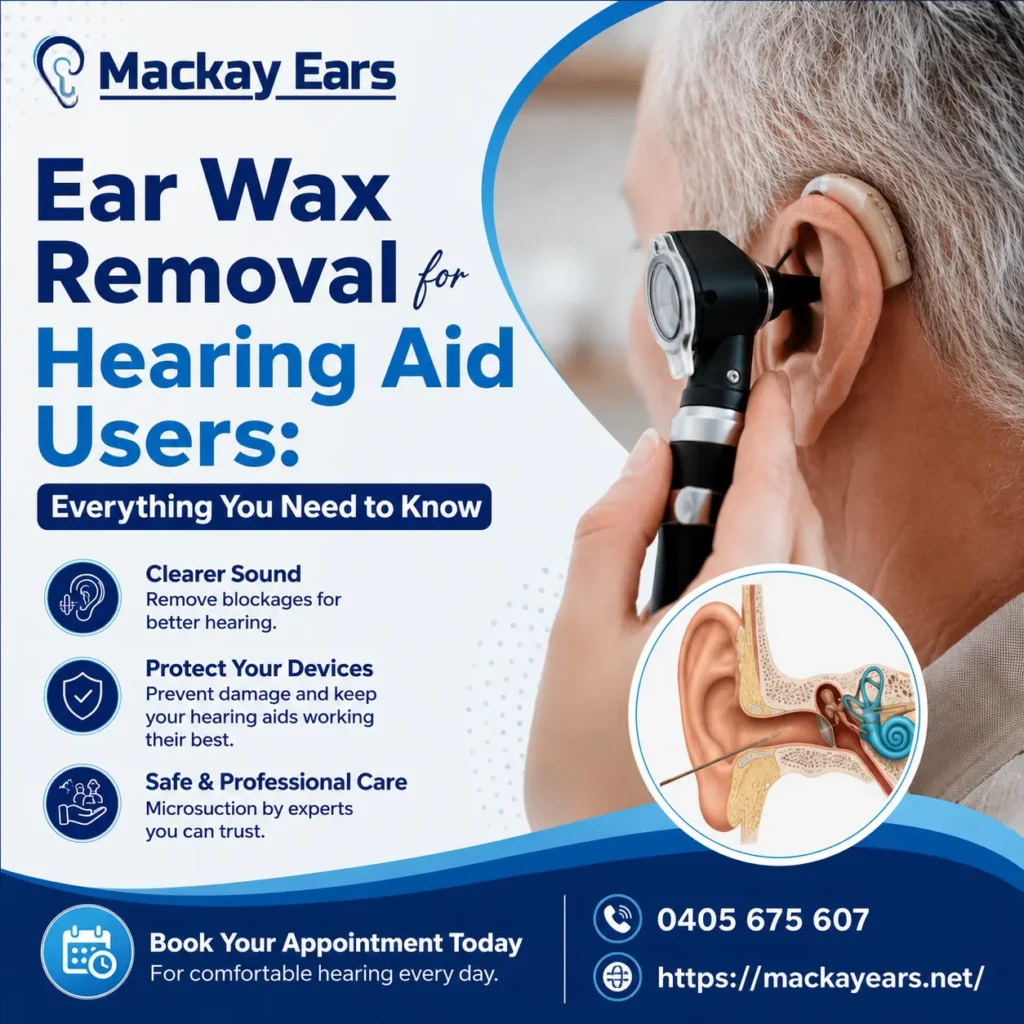
At Mackay Ears, we provide professional microsuction ear wax removal, a modern technique that allows clinicians to remove ear wax under direct visual guidance.
Unlike traditional irrigation, microsuction does not rely on flushing water into the ear canal.
What Is Microsuction Ear Wax Removal?
Microsuction is considered one of the most precise methods of ear wax removal.
During the procedure, your clinician uses:
- Magnification
- Medical lighting
- A sterile suction device
This allows wax to be removed safely while continuously viewing the ear canal.
Most appointments take around 20–30 minutes.
Many patients notice clearer hearing immediately after treatment.
How Often Should Hearing Aid Users Have Their Ears Checked?
There is no fixed schedule for everyone.
However, hearing aid users often benefit from professional ear examinations every 6–12 months, depending on:
- Ear wax production
- Hearing aid use
- Ear anatomy
- Previous history of wax build-up
Your clinician can recommend a schedule that suits your individual needs.
What Not to Do
Avoid trying to remove ear wax using:
- Cotton buds
- Hairpins
- Ear candles
- Ear picks
- Sharp objects
These methods can:
- Push wax deeper
- Damage the ear canal
- Increase the risk of infection
- Injure the eardrum
Professional treatment is always the safest option.
Frequently Asked Questions
Do hearing aids create more ear wax?
No.
Hearing aids do not increase wax production, but they can prevent wax from moving naturally out of the ear.
Can ear wax stop hearing aids from working?
Yes.
Wax can block the microphone, receiver, or sound outlet, reducing hearing aid performance.
How often should hearing aid users have ear wax removed?
It varies from person to person.
Some people may need annual check-ups, while others with frequent wax build-up may require more regular care.
Is microsuction safe for hearing aid users?
Yes.
When performed by trained clinicians, microsuction is widely regarded as a safe and effective method of ear wax removal and is commonly used for hearing aid users.
Why Choose Mackay Ears?
At Mackay Ears, we understand the unique ear care needs of hearing aid users.
Our experienced clinicians provide:
- ✔ Comprehensive Ear Assessments
- ✔ Professional Microsuction Ear Wax Removal
- ✔ Modern Clinical Equipment
- ✔ Personalised Ear Care Advice
- ✔ Hearing Aid Support
- ✔ Comfortable, Patient-Focused Care
Our goal is to help you maintain clear hearing while protecting both your ears and your hearing aids.
Conclusion
Hearing aids improve hearing, but they can also increase the likelihood of ear wax build-up by interfering with the ear’s natural cleaning process.
Regular ear care, proper hearing aid maintenance, and professional ear examinations can help prevent blocked ears, improve hearing aid performance, and reduce the risk of recurring wax problems.
If you’re experiencing blocked ears, hearing aid feedback, or reduced hearing, Mackay Ears offers safe, professional microsuction ear wax removal to help you hear clearly and comfortably.
Book your appointment today and keep both your ears and your hearing aids performing at their best.