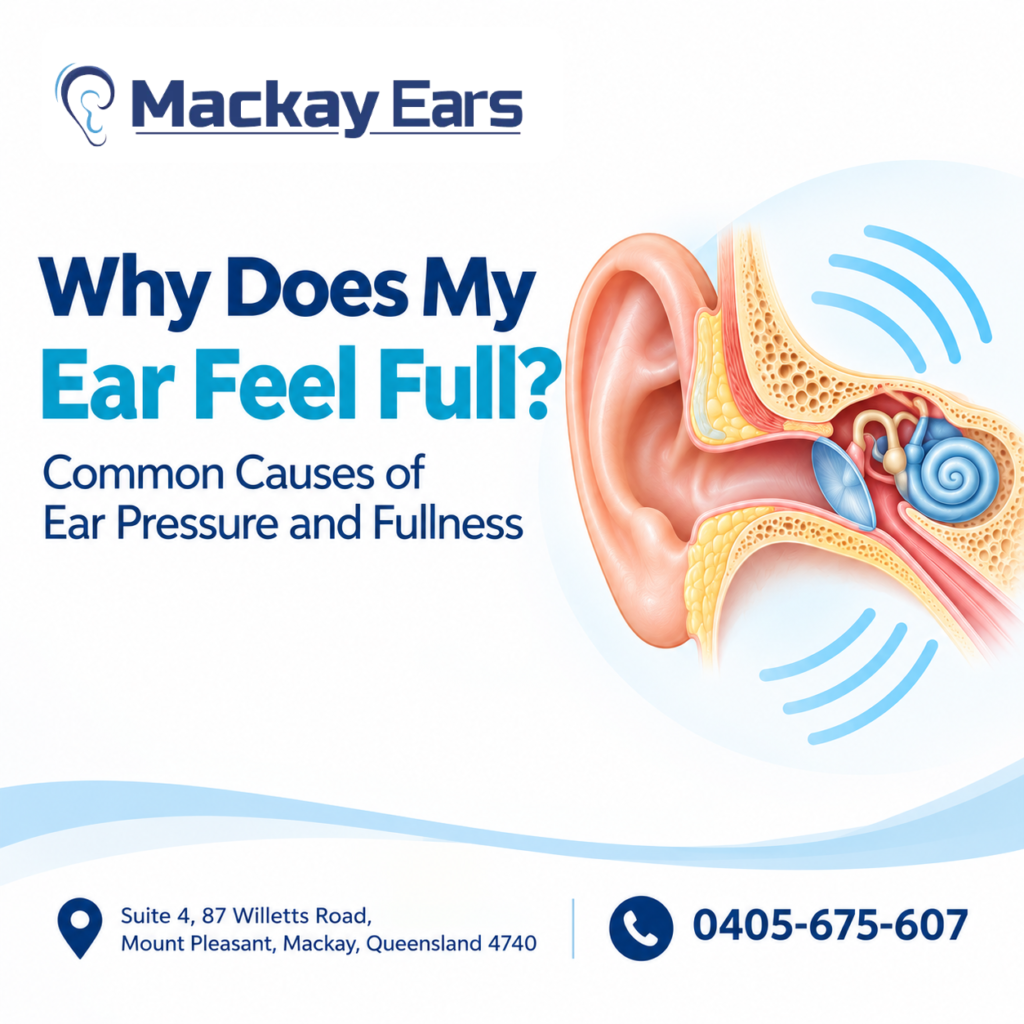
Have you ever felt like your ear is blocked, clogged, or under pressure? Perhaps sounds seem muffled, your ear feels like it needs to “pop,” or it feels as though there is water trapped inside. This sensation is commonly described as ear fullness.
So, why does your ear feel full? There are several possible causes. Earwax buildup, Eustachian tube dysfunction, ear infections, fluid behind the eardrum, allergies, sinus congestion and changes in air pressure can all cause a feeling of pressure or blockage.
In many cases, ear fullness is temporary. However, if the sensation continues or occurs with hearing changes, pain, tinnitus, dizziness or discharge, it is important to find out what is causing it rather than assuming it is simply earwax.
What Is Ear Fullness?
Ear fullness is a sensation of pressure, blockage or heaviness inside the ear. Some people describe it as feeling like their ear is plugged, while others say it feels like being underwater or having an ear that will not “pop.”
You may experience ear fullness in one ear or both ears. It can appear suddenly or develop gradually, depending on the underlying cause.
Common symptoms that can occur alongside ear fullness include:
- Muffled or reduced hearing
- A blocked or clogged feeling
- Pressure in the ear
- Popping or clicking
- Ringing or buzzing
- Mild ear discomfort
- A sensation of water in the ear
- Difficulty hearing conversations clearly
Because different ear conditions can produce similar symptoms, the sensation itself does not always reveal the cause.
Why Does My Ear Feel Full?
Earwax Buildup
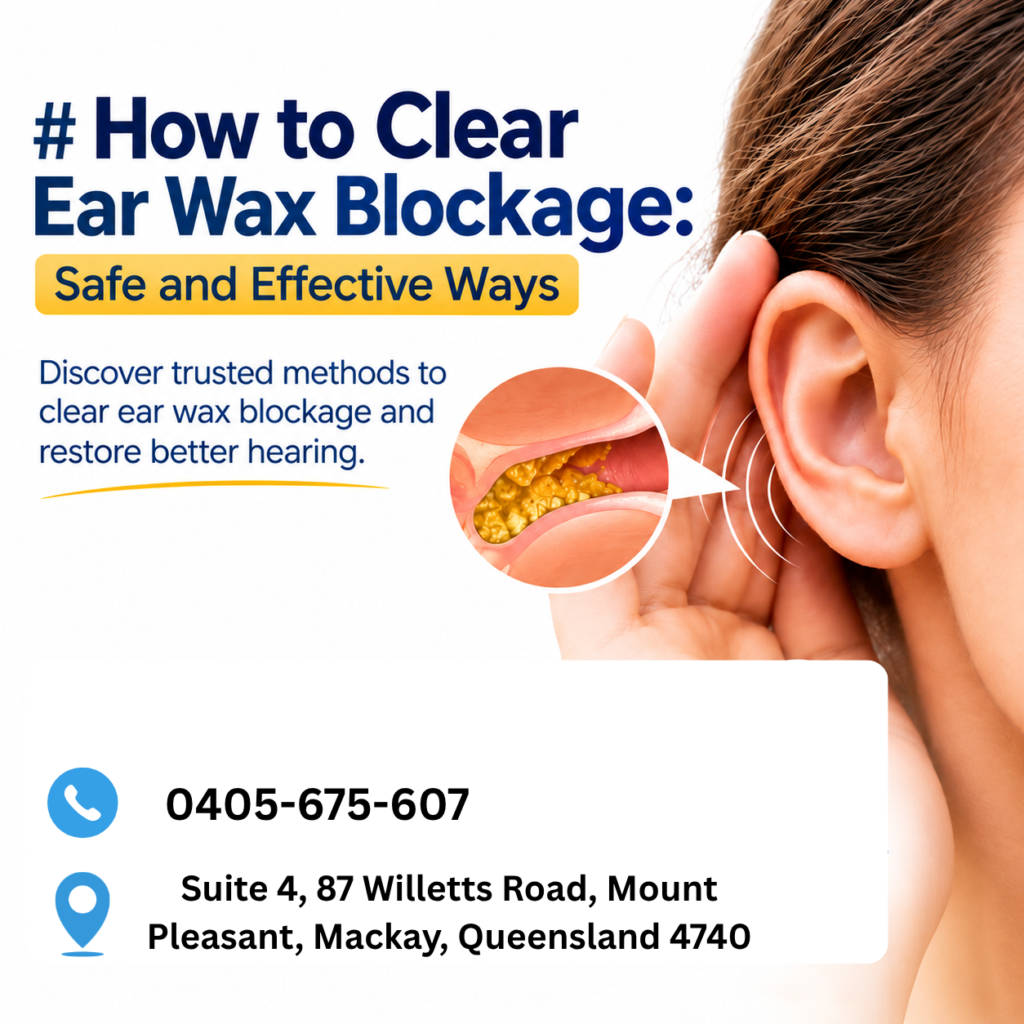
One of the common causes of a blocked or full-feeling ear is excessive or impacted earwax.
Earwax, also known as cerumen, is normal and plays an important role in protecting the ear canal. It helps trap dust and debris and supports the ear’s natural protective processes.
Usually, old earwax gradually moves towards the outside of the ear. However, wax can sometimes build up and become impacted. When this happens, it may block the ear canal and affect the way sound reaches the eardrum.
You may notice fullness together with muffled hearing, itching, tinnitus or discomfort.
If you suspect earwax is responsible, an ear examination can help determine whether wax is actually blocking the ear canal.
Eustachian Tube Dysfunction
The Eustachian tubes connect the middle ear with the back of the nose and throat. One of their important functions is helping equalise pressure on both sides of the eardrum.
If the Eustachian tubes do not open properly, pressure can build up in the middle ear. This can create the sensation that your ear is full or blocked.
Eustachian tube problems can occur after a cold, respiratory infection or allergies. They can also become noticeable during changes in altitude.
Common symptoms can include:
- Ear fullness
- Pressure
- Muffled hearing
- Popping or clicking
- Ear discomfort
- Tinnitus
- Occasionally dizziness
Changes in Air Pressure
Have you ever experienced blocked ears during a flight?
Rapid changes in air pressure can make your ears feel full or uncomfortable, especially during take-off and landing. This can also happen when scuba diving or travelling through significant changes in altitude.
Normally, the Eustachian tubes help equalise the pressure. If they do not open effectively, you may experience pressure, fullness, muffled hearing or discomfort.
Swallowing, yawning and chewing can sometimes help the ears equalise naturally.
Ear Infection
An ear infection can also cause a blocked or full sensation.
Depending on the type of infection, you may experience ear pain, pressure, muffled hearing, fever or discharge.
Middle-ear infections can involve fluid behind the eardrum. This fluid can affect the movement of the eardrum and make sounds seem muffled.
If ear fullness occurs with significant pain, fever or discharge, appropriate medical assessment is important.
Fluid Behind the Eardrum
Fluid can sometimes remain in the middle ear after an infection or when the Eustachian tubes are not functioning normally.
This can produce a feeling of pressure or fullness without necessarily causing severe pain.
You might notice that sounds seem quieter or as though you are hearing them through water.
An examination can help distinguish fluid or middle-ear problems from a simple earwax blockage.
Colds, Allergies and Sinus Congestion
A cold or allergy flare-up can also affect your ears.
When the tissues around the nose and throat become swollen or congested, normal Eustachian tube function can be affected. This may create pressure or fullness in one or both ears.
You may also have:
- A blocked or runny nose
- Sneezing
- Sinus congestion
- Facial pressure
- Post-nasal drip
- Coughing
In many cases, the ear symptoms improve as the underlying congestion settles. Persistent symptoms, however, should not be ignored.
Swimmer’s Ear
After swimming, you may notice that an ear feels blocked or uncomfortable. While water can temporarily remain in the outer ear canal, persistent symptoms may also be caused by irritation or inflammation of the ear canal.
Swimmer’s ear can cause pain, itching, swelling, tenderness and sometimes discharge.
If your ear becomes painful after swimming, avoid putting cotton buds or other objects into the ear canal.
Can Earwax Cause a Feeling of Fullness?
Yes. Impacted earwax can cause ear fullness.
When wax blocks the ear canal, it can interfere with sound transmission and may make hearing seem muffled. Some people may also experience tinnitus, itching, discomfort or a blocked sensation.
However, it is important not to assume that every full or blocked ear is caused by wax.
If the ear canal is clear, the sensation may be related to Eustachian tube dysfunction, fluid behind the eardrum, infection, allergies, pressure changes or another ear condition.
This is why an appropriate ear examination can be useful when symptoms persist.
Why Does My Ear Feel Full But There Is No Wax?
Sometimes your ear can feel completely blocked even when there is little or no earwax present.
Possible causes include:
- Eustachian tube dysfunction
- Fluid behind the eardrum
- A recent cold
- Allergies
- Sinus congestion
- Ear infection
- Flying or diving
- Other conditions affecting the middle or inner ear
The ear canal can look clear while pressure or fluid is affecting the middle ear.
If you have persistent ear fullness without visible wax, avoid repeatedly trying to clean the ear. The underlying cause may require a different approach.
Ear Fullness and Muffled Hearing
Ear fullness and muffled hearing frequently occur together.
When earwax blocks the ear canal, sounds may become quieter or unclear. Similarly, pressure or fluid affecting the middle ear can make hearing seem muffled.
You might notice that:
- Conversations sound less clear
- Television volume seems louder than usual
- One ear sounds different from the other
- Your own voice sounds unusual
- Sounds seem as though they are coming from underwater
However, hearing changes have many possible causes. Do not automatically assume that hearing loss is caused by earwax.
A sudden or significant change in hearing requires prompt assessment.
Ear Fullness and Tinnitus
Some people experience tinnitus together with ear fullness.
Tinnitus can sound like ringing, buzzing, humming, hissing or another noise that is not coming from an external source.
Earwax blockage and Eustachian tube problems can sometimes occur alongside tinnitus. However, tinnitus has many possible causes.
If tinnitus persists, becomes troublesome or occurs with hearing changes, dizziness or other symptoms, appropriate assessment is recommended.
What Can You Do About Ear Pressure?
The best way to deal with ear pressure depends on the cause.
For mild pressure associated with flying or altitude changes, you can try:
- Swallowing regularly
- Yawning
- Chewing gum
- Drinking water
- Allowing the ears time to equalise naturally
If you suspect earwax is causing the blockage, avoid inserting anything into the ear.
Cotton buds can push wax deeper into the ear canal and may irritate or injure the ear.
What Should You Avoid When Your Ear Feels Blocked?
When your ear feels full, avoid trying to aggressively clean or force it open.
In particular, avoid:
- Inserting cotton buds deep into the ear
- Using pens, keys or other objects to remove wax
- Scratching inside the ear canal
- Repeatedly attempting forceful pressure-equalising techniques
- Assuming that every blocked ear is caused by wax
If symptoms continue, finding the cause is more useful than repeatedly trying different home remedies.
One Simple Comparison: Earwax vs Eustachian Tube Problems
| Symptom or Situation | Earwax Blockage | Eustachian Tube Dysfunction |
| Feeling of fullness | Common | Common |
| Muffled hearing | Common | Common |
| Blocked sensation | Common | Common |
| Tinnitus | Possible | Possible |
| Popping or clicking | Less typical | Common |
| After flying | Less typical | Common |
| After a cold or allergies | Less typical | Common |
| Wax visible in ear canal | May be present | Usually not the cause |
These symptoms can overlap, so this comparison should not be used as a diagnosis. An appropriate examination may be needed to identify the actual cause.
When Should You Get Your Ear Checked?
Occasional ear pressure may settle naturally, particularly when it is related to a temporary cold or change in altitude.
However, consider getting your ear assessed if the fullness:
- Continues for several days
- Keeps returning
- Is affecting your hearing
- Occurs with persistent tinnitus
- Causes significant discomfort
- Is associated with dizziness or balance problems
- Occurs with ear discharge
- Develops alongside significant pain
Sudden Hearing Loss Needs Prompt Attention
If you experience sudden hearing loss, particularly in one ear, do not assume that earwax is responsible.
Sudden or rapidly developing hearing changes should receive prompt medical assessment.
How Is Ear Fullness Diagnosed?
Finding the cause of ear fullness generally begins with looking inside the ear.
An appropriate assessment may involve examining the ear canal and eardrum for wax, inflammation, infection or other visible changes.
If hearing has changed, a hearing assessment may also be appropriate. In some situations, middle-ear testing can help assess pressure and how the middle ear is functioning.
The appropriate assessment depends on your symptoms and clinical findings.
Professional Earwax Assessment in Mackay
If you live in Mackay and your ear feels blocked or full, Mackay Ears provides professional ear cleaning and microsuction earwax removal services. The clinic is located at Suite 4, 87 Willetts Road, Mount Pleasant, Mackay, QLD, Australia, 4740. Mackay Ears’ published information describes professional earwax assessment, microsuction services and personalised ear care.
If you are unsure whether earwax is causing your symptoms, an assessment can help determine whether there is a wax blockage or whether your symptoms may have another cause. Mackay Ears can be contacted on 0405 675 607, and appointments can also be arranged through the clinic website: Mackay Ears.
Mackay Ears is located in Mount Pleasant and lists opening hours of Monday to Friday, 8:00 am to 4:30 pm.
Frequently Asked Questions
Why does my ear feel full?
Ear fullness can be caused by earwax buildup, Eustachian tube dysfunction, ear infections, fluid behind the eardrum, allergies, sinus congestion or changes in air pressure.
Can earwax make your ear feel full?
Yes. Impacted earwax can block the ear canal and cause fullness, muffled hearing, tinnitus or discomfort.
Why does my ear feel blocked but there is no wax?
A blocked feeling without significant wax may be related to Eustachian tube dysfunction, fluid behind the eardrum, infection, allergies, sinus congestion or pressure changes.
Can a cold cause ear pressure?
Yes. Congestion and inflammation associated with a cold can interfere with Eustachian tube function and contribute to ear pressure or fullness.
Can allergies cause ear fullness?
Yes. Nasal congestion and inflammation associated with allergies can affect Eustachian tube function and cause a blocked or full sensation.
Why do my ears feel full after flying?
Changes in cabin pressure can temporarily create a pressure difference across the eardrum. Swallowing, yawning and chewing can help the Eustachian tubes equalise pressure.
Can an ear infection cause a blocked ear?
Yes. An ear infection and fluid behind the eardrum can cause pain, pressure, fullness and muffled hearing.
Can ear fullness cause tinnitus?
Ear fullness and tinnitus can occur together. Earwax blockage and Eustachian tube dysfunction are examples of conditions that may cause both symptoms.
When should I worry about ear fullness?
Persistent fullness, significant pain, discharge, dizziness or a noticeable hearing change should be appropriately assessed. Sudden hearing loss requires prompt medical attention.
Professional Ear Care at Mackay Ears
If you have a persistent blocked or full-feeling ear and suspect earwax may be contributing to the problem, professional assessment can help establish whether wax is actually present and whether removal is appropriate.
Mackay Ears specialises in professional ear cleaning and microsuction earwax removal in Mackay. The clinic’s published information also identifies its Mount Pleasant location and professional ear care services.
Mackay Ears
Suite 4, 87 Willetts Road
Mount Pleasant, Mackay, QLD, Australia, 4740
Phone: 0405 675 607
For appointments and further information, visit mackayears.net.
Key Takeaway
A full or blocked ear does not always mean you have earwax.
Earwax buildup, Eustachian tube dysfunction, pressure changes, infections, middle-ear fluid, allergies and sinus congestion can all cause similar sensations.
If you suspect earwax, avoid putting cotton buds or other objects into your ear canal. If the feeling of fullness persists, affects your hearing or occurs with pain, tinnitus, dizziness or discharge, appropriate assessment can help identify the cause.
The most important step is finding out why your ear feels full before deciding how to treat it.
Medical Disclaimer
This article is for general educational purposes and does not replace individual medical advice, diagnosis or treatment. Ear fullness and hearing changes can have different causes. If you experience sudden hearing loss, severe pain, significant dizziness, bleeding or persistent discharge, seek appropriate medical assessment.