1. Understanding the Role of Cerumen (Earwax)
Most people view earwax as a “dirty” substance that needs to be scrubbed away. However, in the world of audiology and otolaryngology, earwax (scientifically known as cerumen) is considered a vital defense mechanism for your body.
Why Your Body Produces Wax
Earwax is a specialized mixture of long-chain fatty acids, alcohols, and cholesterol produced by the ceruminous and sebaceous glands in the outer ear canal. It serves three primary functions:
- Protection: It traps dust, pollutants, and small insects before they can reach the delicate eardrum.
- Lubrication: Without wax, your ear canals would become dry, itchy, and prone to “flaking” or cracks.
- Antibacterial Properties: The slightly acidic pH of earwax prevents the growth of fungi and bacteria, reducing the risk of middle ear infections.
2. The “Mackay Factor”: Why Our Climate Affects Your Ears
Living in Mackay, Queensland, presents unique challenges for ear health. Our tropical, high-humidity environment can significantly alter how your body manages earwax.
- Humidity & Stickiness: High moisture levels in the air can make earwax “stickier” and more prone to clumping. Instead of drying out and falling out naturally, the wax absorbs moisture and stays trapped.
- The “Crush” Season: During Mackay’s sugar cane harvesting season, there is an increase in organic dust and particulate matter. This dust often settles in the ear canal, mixing with cerumen to create a dense, stubborn blockage.
- Swimming & Water Activities: From the Bluewater Lagoon to our local beaches, Mackay locals spend a lot of time in the water. Trapped water behind a small amount of wax can cause the wax to swell, leading to sudden hearing loss or “Swimmer’s Ear.”
3. The Dangers of Home Removal & Syringing
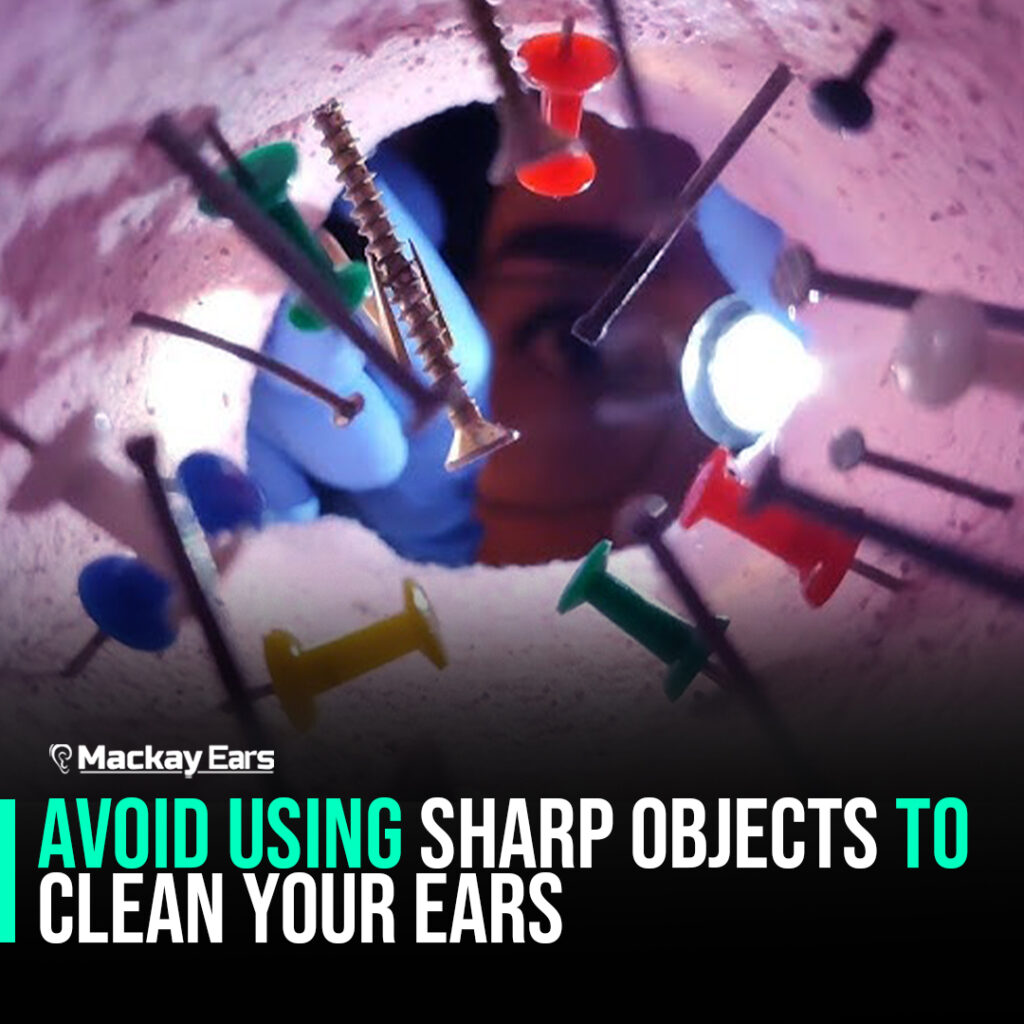
When your ears feel blocked, the temptation to reach for a cotton bud is high. However, this is the leading cause of impacted earwax.
The “Cotton Bud” Trap
The ear canal is a “dead end.” When you insert a cotton bud, you are not pulling wax out; you are using the bud as a piston to ram the wax deeper against the eardrum. This can lead to:
- Tympanic Membrane Perforation: A ruptured eardrum.
- External Otitis: Scratches in the canal that lead to painful infections.
The Risks of Traditional Syringing (Irrigation)
For decades, “syringing” or irrigation was the standard. This involves shooting a high-pressure stream of water into the ear to flush out wax. While common, modern specialists now advise against it for several reasons:
- Pressure Damage: The force of the water can inadvertently cause eardrum perforations.
- Infection Risk: Introducing water into the ear creates a damp environment—the perfect breeding ground for bacteria (especially in Mackay’s heat).
- Inefficiency: If the wax is hard, the water cannot get behind it, often making the blockage feel tighter.
4. Why Micro-suction at Mackay Ear is the Gold Standard
At Mackay Ear, we utilize Micro-suction, which is widely regarded by ENT (Ear, Nose, and Throat) specialists as the safest and most effective method available today.
How Micro-suction Works
Unlike syringing, which is a “blind” procedure (the practitioner cannot see what the water is doing), micro-suction is performed under direct visualization.
- The Microscope: Our specialists use high-powered magnifying “loupes” or a microscope to see deep into your ear canal.
- The Suction: We use a medical-grade, low-pressure suction device (effectively a tiny vacuum cleaner).
- The Result: The wax is gently lifted away from the canal wall and removed without the need for water or high pressure.
The Benefits of Choosing Mackay Ear
- Precision: We see exactly what we are doing, ensuring the eardrum is never touched.
- Dry Procedure: Because no water is used, there is a significantly lower risk of post-procedure infection.
- Instant Relief: Most patients experience an immediate restoration of hearing and a cessation of that “fullness” or “muffled” sensation.
- Comfort: It is a painless procedure, often taking less than 15–20 minutes.
5. Recognizing the Symptoms of Impacted Wax
How do you know it’s time to visit Mackay Ear? Look for these “Warning Signs”:
- Gradual Hearing Loss: Sounds becoming muffled over days or weeks.
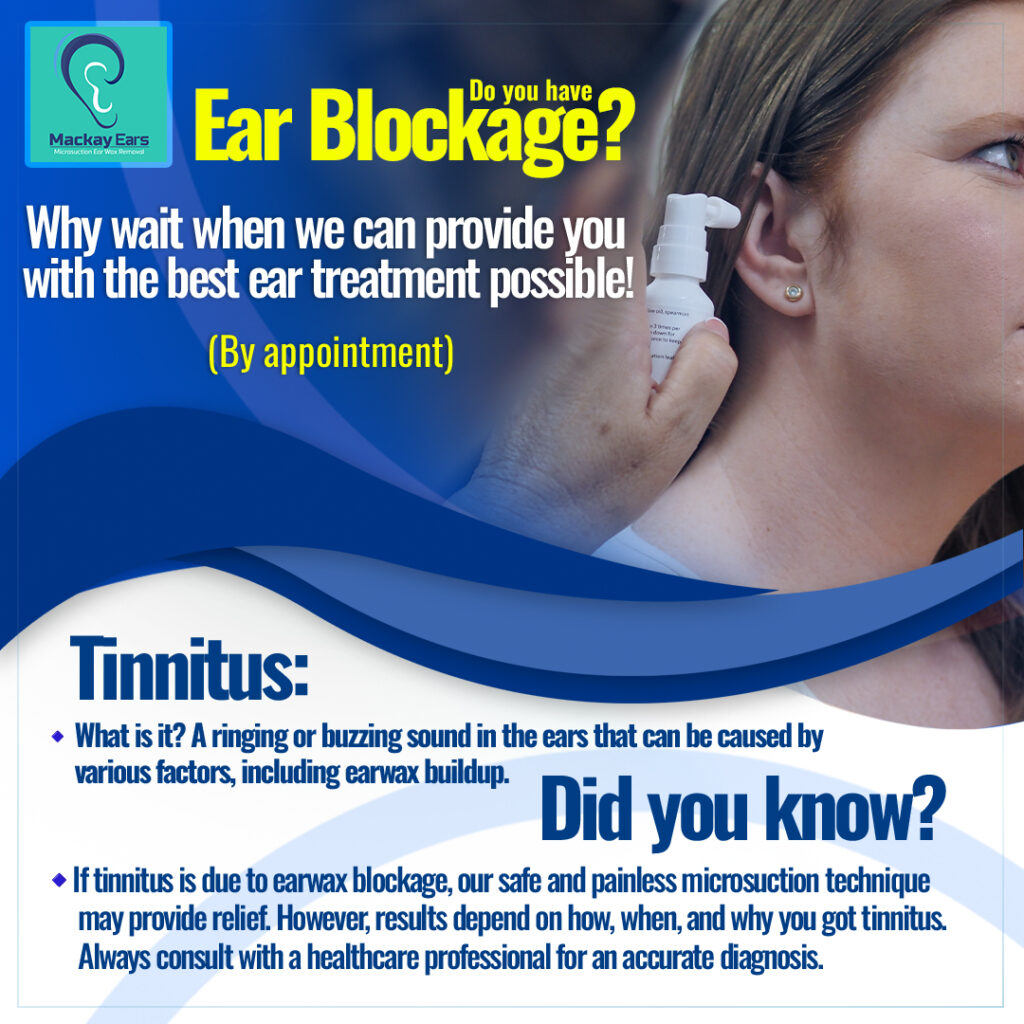
- Tinnitus: A ringing or buzzing sound in the affected ear.
- Autophony: Hearing your own voice sounding “hollow” or louder than usual.
- Dizziness (Vertigo): Wax pressing against the eardrum can sometimes affect your balance.
- Persistent Itching: Often caused by “old” wax that has become hard and irritating.
6. Comparing Earwax Removal Costs and Methods
| Method | Safety Rating | Best For | Risk Factor |
| Micro-suction | ⭐⭐⭐⭐⭐ | Everyone (including children) | Minimal |
| Manual Curettage | ⭐⭐⭐⭐ | Hard, dry flakes | Low (if done by pro) |
| Irrigation | ⭐⭐ | Soft wax | Medium (Eardrum trauma) |
| Home Kits | ⭐ | Minor maintenance | High (Impaction) |
Conclusion: Prioritizing Your Hearing Health
Your hearing is one of your most precious senses. While earwax is a natural part of life, its buildup shouldn’t be allowed to interfere with your quality of life in Mackay. By choosing professional micro-suction at Mackay Ear, you are opting for a medical-grade solution that prioritizes safety, comfort, and long-term ear health.
Don’t let blocked ears stop you from enjoying the sounds of the Whitsundays or the conversations of your loved ones. Trust the experts who use the right tools for the job.