Ear pressure is a common sensation that can make your ear feel blocked, full, tight, or as though you are underwater. It may happen after a flight, during a cold, with allergies, or because of earwax buildup. In many cases, ear pressure improves on its own. However, ear pressure that won’t go away may need professional assessment, particularly when it is persistent, painful, affects hearing, or occurs with other symptoms.
Understanding what causes ear pressure can help you decide when simple self-care may be appropriate and when you should have your ears checked.
What Does Ear Pressure Feel Like?
Ear pressure can feel different from person to person. Some people describe it as a blocked or plugged ear, while others experience a feeling of fullness or pressure inside the ear.
You may notice:
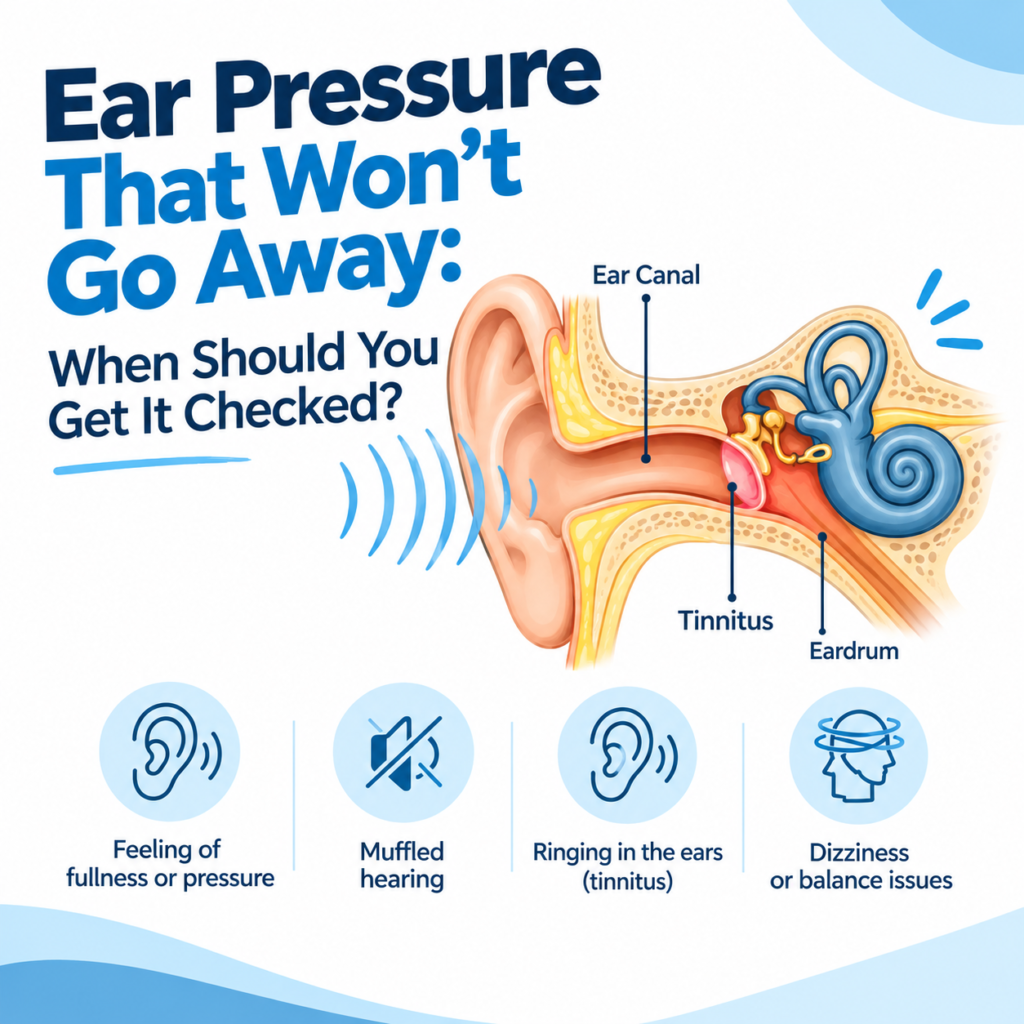
- A blocked or full sensation in one or both ears
- Muffled or reduced hearing
- Popping or clicking sounds
- Difficulty equalising ear pressure
- Ringing or buzzing in the ear (tinnitus)
- A feeling that sounds are coming from underwater
- Mild discomfort or pain
- Dizziness or imbalance in some cases
The sensation may be temporary, or it can continue for days or even longer depending on the underlying cause.
Why Does My Ear Feel Full or Pressurised?
Several conditions can create a feeling of pressure in the ear. The cause is not always inside the ear itself. Problems involving the nose, sinuses, throat, or the Eustachian tubes can also affect how pressure is regulated.
1. Eustachian Tube Dysfunction
The Eustachian tubes connect the middle ear to the back of the nose and help equalise pressure on both sides of the eardrum.
When these tubes do not open properly, pressure can build up in the middle ear. This is commonly known as Eustachian tube dysfunction (ETD).
You may notice:
- Ear pressure or fullness
- Popping and clicking
- Muffled hearing
- Difficulty equalising during flights
- Symptoms after a cold or allergy flare-up
ETD can occur after respiratory infections, allergies, sinus congestion, or changes in air pressure.
2. Earwax Buildup
Earwax, also called cerumen, is produced naturally inside the ear canal. It helps protect the ear, but excessive accumulation can block the ear canal.
A significant earwax buildup can cause a sensation of:
- Fullness
- Pressure
- Blockage
- Muffled hearing
- Ringing in the ear
If your ear feels blocked and your hearing has changed, earwax may be one possible explanation. However, it is important not to assume that wax is the cause without having the ear examined.
3. Changes in Air Pressure
Flying, diving, travelling through high altitudes, or rapidly changing elevation can cause pressure differences between the middle ear and the surrounding environment.
This is sometimes called ear barotrauma or simply airplane ear.
Most people experience temporary pressure that improves after the pressure change ends. If the sensation continues after travel or diving, an ear examination may help identify the cause.
4. Ear Infection
An ear infection can cause pressure, pain, fullness, and changes in hearing. Some infections affect the outer ear canal, while others involve the middle ear.
Depending on the type of infection, symptoms may include:
- Ear pain
- Pressure or fullness
- Reduced hearing
- Fluid or discharge
- Fever
- Tenderness around the ear
Persistent pain, discharge, or worsening symptoms should be assessed by an appropriate healthcare professional.
5. Fluid Behind the Eardrum
Fluid can sometimes collect in the middle ear, particularly following a cold, respiratory infection, or Eustachian tube problem.
This can create a blocked or underwater sensation and may temporarily reduce hearing.
The ear may not necessarily be painful, which can make the problem easy to overlook.
6. Colds, Allergies and Sinus Congestion
A blocked nose can affect the Eustachian tubes and make it harder for the middle ear to regulate pressure.
If your ear pressure appeared around the same time as:
- A cold
- Hay fever
- Nasal congestion
- Sinus symptoms
- Seasonal allergies
then congestion may be contributing to the sensation.
7. Water Trapped in the Ear
After swimming or showering, water can sometimes remain in the ear canal. This may temporarily make hearing sound muffled or create a blocked sensation.
If the problem persists, particularly if pain or discharge develops, it should be assessed rather than repeatedly attempting to remove the water yourself.
How Long Should Ear Pressure Last?
There is no single timeframe that applies to every cause of ear pressure. Temporary pressure caused by flying, altitude changes, or mild congestion may resolve relatively quickly.
However, ear pressure that persists, repeatedly returns, or is accompanied by hearing changes should not simply be ignored.
The important consideration is not only how long the pressure has been present, but also whether other symptoms are developing.
Get your ear checked if:
- The pressure does not improve
- Your hearing remains muffled
- The problem keeps returning
- You have persistent ear pain
- You notice ringing or buzzing
- There is fluid or discharge from the ear
- You experience dizziness or balance problems
- The symptoms are affecting your everyday activities
When Is Ear Pressure an Urgent Concern?
A sudden change in hearing, especially in one ear, should be taken seriously. Sudden hearing loss can sometimes require urgent medical assessment, and it should not automatically be attributed to earwax or congestion.
Seek prompt medical attention if ear pressure occurs with:
- Sudden or significant hearing loss
- Severe dizziness or vertigo
- Severe ear pain
- Blood or unusual discharge from the ear
- Significant swelling around the ear
- New neurological symptoms
- Symptoms following a significant head injury
If you suddenly cannot hear properly in one ear, arrange urgent medical assessment rather than waiting to see whether the pressure disappears.
What Should You Do About Persistent Ear Pressure?
The right approach depends on the underlying cause. If you have recently had a cold or experienced a flight, mild pressure may improve as the underlying problem settles.
However, persistent symptoms deserve assessment rather than repeated self-treatment.
A healthcare professional may examine the ear canal and eardrum to determine whether the problem is related to earwax, infection, fluid, pressure regulation, or another condition.
If earwax is identified as the cause, appropriate professional removal may help restore the ear canal and improve hearing.
What Should You Avoid?
When your ear feels blocked, it can be tempting to try to fix the problem yourself. Some common methods can make an ear problem worse.
Avoid:
- Inserting cotton buds deep into the ear canal
- Using objects to scrape earwax out
- Repeatedly trying to forcefully pop the ears
- Ignoring persistent hearing changes
- Assuming every blocked ear is caused by wax
- Using ear products without checking whether they are suitable for your ears
The ear canal is delicate, and attempting to remove a blockage without knowing its cause can potentially cause injury.
Common Causes of Persistent Ear Pressure
| Possible Cause | Typical Sensation or Symptoms | When Assessment May Help |
| Earwax buildup | Fullness, blockage, muffled hearing, tinnitus | When symptoms persist or hearing changes |
| Eustachian tube dysfunction | Pressure, popping, fullness, muffled hearing | When symptoms continue or repeatedly return |
| Air-pressure changes | Blocked feeling after flying or diving | If pressure does not settle |
| Ear infection | Pain, pressure, reduced hearing, possible discharge | Persistent or worsening symptoms |
| Middle-ear fluid | Fullness and underwater hearing | If hearing remains affected |
| Colds or allergies | Congestion with ear pressure | If symptoms persist after congestion improves |
| Water in the ear | Temporary blocked or muffled hearing | If it does not clear or pain develops |
Can Earwax Cause Ear Pressure?
Yes. Excessive earwax can block the ear canal and create a sensation of fullness or pressure. It can also make sounds seem quieter or muffled and may sometimes be associated with tinnitus.
However, earwax is only one possible cause of ear pressure. If your ear remains blocked after wax has been removed, another problem may need to be considered.
This is why an ear examination is useful when symptoms persist.
Ear Pressure and Muffled Hearing
Ear pressure and muffled hearing commonly occur together. When the ear canal is blocked by wax, or when pressure affects the middle ear, sound may not reach the hearing system normally.
You might describe the experience as:
“My ear feels blocked and everything sounds far away.”
If the hearing change continues, especially in one ear, professional assessment is recommended.
Ear Pressure and Tinnitus
Some people notice ringing, buzzing, humming, or other sounds when their ear feels blocked or pressurised.
Earwax, congestion, middle-ear problems, and several other conditions can be associated with tinnitus. Persistent tinnitus should not automatically be blamed on earwax.
If tinnitus is new, persistent, one-sided, or associated with hearing loss or dizziness, an appropriate hearing or medical assessment can help determine what may be contributing to it.
How Is Persistent Ear Pressure Diagnosed?
A professional assessment may begin with questions about when the pressure started, whether it affects one or both ears, and whether you have experienced recent illness, allergies, flying, diving, water exposure, pain, tinnitus, or hearing changes.
The ear canal and eardrum can then be examined to look for visible causes such as earwax, inflammation, infection, or other abnormalities.
Depending on the symptoms, further hearing or medical assessment may be recommended.
The goal is not simply to remove a possible blockage but to identify why the pressure is happening.
Professional Ear Care in Mackay
If you are experiencing persistent ear pressure, blocked ears, or hearing changes and are concerned that earwax may be contributing, Mackay Ears provides professional ear care in Mackay, Queensland.
Mackay Ears
Suite 4, 87 Willetts Road, Mount Pleasant, Mackay, QLD, Australia, 4740
You can learn more about ear care and professional earwax removal through the Mackay Ears website: https://mackayears.net/
If your symptoms suggest something other than earwax, further medical or hearing assessment may be appropriate.
Frequently Asked Questions
Why does my ear pressure not go away?
Persistent ear pressure can have several causes, including Eustachian tube dysfunction, earwax buildup, middle-ear fluid, infection, allergies, congestion, or pressure-related problems. An ear examination can help determine the likely cause.
How long is too long for ear pressure?
There is no universal timeframe because the expected duration depends on the cause. If pressure persists, repeatedly returns, or affects your hearing, it is sensible to have your ears checked.
Can blocked ears be caused by earwax?
Yes. A buildup of earwax can block the ear canal and cause fullness, pressure, muffled hearing, or tinnitus. However, not every blocked ear is caused by wax.
Should I use cotton buds for ear pressure?
Cotton buds should not be inserted deeply into the ear canal. They can push wax further into the ear and may injure the ear canal or eardrum.
Why does my ear feel full but there is no wax?
Ear pressure can occur even when the ear canal is clear. Eustachian tube dysfunction, congestion, middle-ear fluid, infection, and pressure changes are among the other possible causes.
When should I worry about ear pressure?
Persistent pressure with significant hearing loss, sudden hearing changes, severe dizziness, severe pain, discharge, or other concerning symptoms should be assessed promptly.
Key Takeaways
- Ear pressure can have several different causes.
- Earwax is one possible cause, but it is not the only one.
- Eustachian tube dysfunction commonly causes fullness, popping, and pressure.
- Colds, allergies, infections, fluid, and air-pressure changes can also affect the ears.
- Persistent ear pressure should not be ignored, particularly when hearing is affected.
- Sudden hearing loss requires prompt medical assessment.
- Avoid inserting objects or cotton buds deep into the ear canal.
- Professional assessment can help identify the actual cause of persistent ear pressure.
Conclusion
Ear pressure that goes away after a flight, cold, or temporary congestion is often short-lived. But when ear pressure won’t go away, keeps returning, or is accompanied by muffled hearing, tinnitus, pain, discharge, or dizziness, it is worth getting the problem checked.
An ear examination can help distinguish between common causes such as earwax and Eustachian tube problems and conditions that may require further medical attention.
For professional ear care and earwax assessment in Mackay, Mackay Ears is located at Suite 4, 87 Willetts Road, Mount Pleasant, Mackay, QLD, Australia, 4740. Visit to learn more.
Medical disclaimer: This article is intended for general educational purposes and does not replace an examination or diagnosis from a qualified healthcare professional. Persistent, severe, or sudden hearing-related symptoms should be appropriately assessed.